Appliance Leak Water Damage in Ridgefield
A washer hose or dishwasher connection can wet the space behind equipment long before water reaches open flooring. Cleanup needs access to that hidden recess and an assessment of the layers beneath the visible spill.
(888) 509-1696Discuss moisture behind an appliance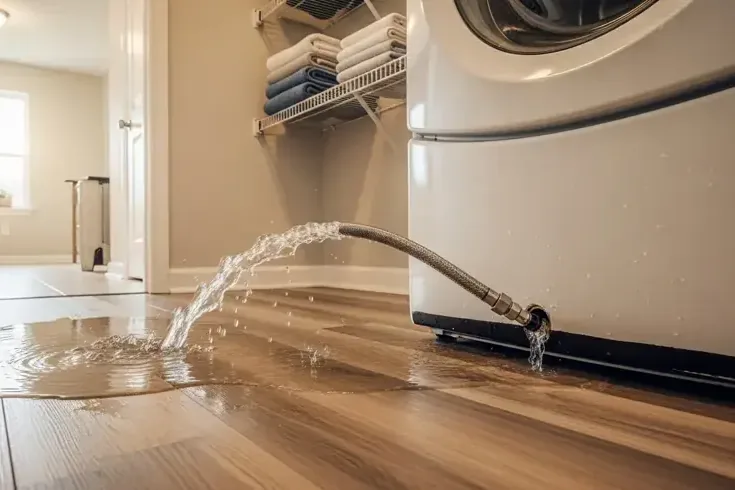
First steps for appliance leak water damage
- Stop the appliance cycle. Leave leaking equipment unused and arrange safe isolation before further operation sends more water behind cabinets or into the floor layers around the machine.
- Describe when water appears. Note whether the release occurs during filling, draining, or idle periods, giving the source investigation a practical description without repeatedly running the leaking equipment.
- Keep connections undisturbed. Avoid dragging the machine from its recess or reaching for wet plugs. Appropriate equipment access protects occupants and prevents additional damage to hoses and surrounding finishes.
- Record nearby material changes. Photograph cabinet swelling, open floor seams, and damp trim from a safe position so the cleanup assessment includes surfaces beyond the obvious wet patch.
An appliance can conceal both the failed connection and the water it releases. A wet floor seam may be the first sign that the recess behind the machine has stayed damp. Ridgefield appliance cleanup starts with the equipment's safe operating condition and the actual source, then follows moisture into the surrounding room.
Use the equipment cycle to describe the problem
Water that appears during a wash cycle may have a different origin from water that continues collecting while the appliance sits idle. Those observations help an equipment or plumbing professional investigate. The cleanup assessment also considers whether the release involved supply water, used wash water, or another discharge.
A Heron Ridge household can describe changes at the cabinet base without moving a connected machine. At a Cedar Ridge property, dampness appearing along a laundry doorway may suggest checking the floor beneath the equipment and the adjacent transition. Neither observation replaces a safe inspection of the connection and recess.
Expose the pocket behind the visible floor
Moving an appliance requires attention to weight, hoses, power connections, and the surrounding finish. Once safe access is available, the assessment can examine wall edges and flooring hidden during ordinary use. Cabinet toe areas and underlayment may need selective access when they trap moisture beyond the exposed room surface.
- Record whether water appears during operation or while the appliance is idle.
- Check the cabinet side facing the wet recess for swelling or separation.
- Inspect flooring transitions where water may have spread beneath the finish.
- Separate equipment repair findings from the surrounding material cleanup scope.
Finish the recess before reinstalling the machine
At a Greely Farms property, pushing a repaired appliance back into place too early can close off wet material. The drying plan should address that access constraint. Structural drying provides the next stage when the supply or discharge problem has been corrected and unsuitable layers have been removed.
The handoff should identify dry retained materials, cabinet repairs, and remaining flooring work. An appliance that runs normally can still sit above damaged underlayment. Documenting the recess before reinstallation helps establish what was inspected and which surrounding finishes require later attention.
Do not pull a heavy appliance across wet flooring while it remains connected to water or power. Avoid wet plugs and switches. Leave the equipment unused until safe isolation and the failed connection have been assessed by an appropriate professional.
The most useful appliance leak description includes when water appears and what has changed around the machine. Note cabinet swelling, damp doorways, and any repair findings so hidden material damage receives attention alongside equipment servicing.
(888) 509-1696Assess the wet appliance recessWhat does appliance leak water damage cost in Ridgefield, WA?
Appliance leak cleanup in Ridgefield depends on concealed access, cabinet damage, and the layers beneath the floor. These ranges describe material cleanup; equipment servicing and replacement finishes should appear as clearly separated tasks.
Small accessible spill
$700 to $1,400
- Open floor water
- Limited recess wetness
- Focused drying access
Cabinet and floor layers
$1,400 to $2,700
- Wet cabinet bases
- Underlayment moisture checks
- Selective material removal
Broader hidden spread
$2,700 to $4,000+
- Connected room damage
- Multiple concealed edges
- Expanded drying arrangement
Estimate only. Water category, affected materials and access determine the scope. Compare the inputs in the water damage cost calculator.
How appliance leak water damage progresses
- 1
Identify the equipment release
The source assessment considers operating observations and connections while the cleanup inspection records which materials received supply water or discharge from the machine.
- 2
Arrange safe recess access
Appropriate equipment handling opens the hidden floor and wall area, allowing moisture checks behind the machine and beside cabinetry before removal decisions are finalized.
- 3
Address trapped material moisture
Affected layers are exposed or removed as needed, then retained surfaces receive drying that accounts for the recess shape and adjoining floor or cabinet edges.
- 4
Prepare for equipment return
The handoff records material conditions and remaining finish work, helping coordinate appliance reinstallation without concealing damp underlayment or an unresolved connection inside the recess.
Related water damage services in Ridgefield
Appliance Leak Water Damage questions in Ridgefield, WA
Can an appliance leak happen while it is switched off?
A connected supply can release water even when equipment is idle if a hose or connection fails. An appropriate professional should identify the source. The cleanup assessment follows the actual wet materials and does not rely only on when the machine last ran.
Should the machine be pulled out immediately?
Heavy equipment and connected hoses or power require careful handling. Moving the machine without isolation can create additional hazards or damage. Safe access should be arranged first, then the recess and adjoining building materials can be inspected for retained water.
Does a dry kitchen floor mean the cabinet base is dry?
Water can remain in enclosed toe spaces or beneath cabinet sides while the open floor looks dry. Selective access and moisture checks help establish those conditions. Swelling or separation should be included in the assessment before cosmetic repairs begin.
Is used wash water handled like a supply leak?
The source and what the water contacted affect cleaning and material decisions. Appliance discharge may contain residue that changes the cleanup scope. The assessment should identify the release rather than assuming that every appliance leak involves clean supply water.
Can flooring remain beneath the appliance during drying?
That depends on its condition, the layers underneath, and available drying access. Some assemblies retain moisture below an apparently sound surface. The scope should explain whether the finish can stay or whether lifting or removal is needed to reach wet materials.
When can the appliance be returned to its recess?
The equipment fault needs correction and the surrounding material condition needs assessment. Drying access and unfinished cabinet or flooring work may affect timing. A documented handoff helps the equipment professional understand what must remain accessible before the machine is reinstalled.
Appliance leak water damage in Ridgefield
Appliance leak assessments include Heron Ridge, Cedar Ridge, and Greely Farms properties, with attention to equipment connections, fitted cabinetry, and the adjoining floor surfaces affected by water.
The same service nearby: appliance leak water damage in Kelso, Rainier, Longview.
Mention cabinet edges and adjoining floor seams
Cleanup planning can establish safe equipment access, identify trapped water, and define the drying work needed before the machine and surrounding finishes return to ordinary use.
(888) 509-1696Discuss appliance related material damage