Ceiling Leak Water Damage in Ridgefield
A ceiling that bows or sheds paint needs more than stain treatment. The room below should stay clear while the source above it, the panel condition, and the surrounding cavity are evaluated for cleanup.
(888) 509-1696Discuss the wet overhead area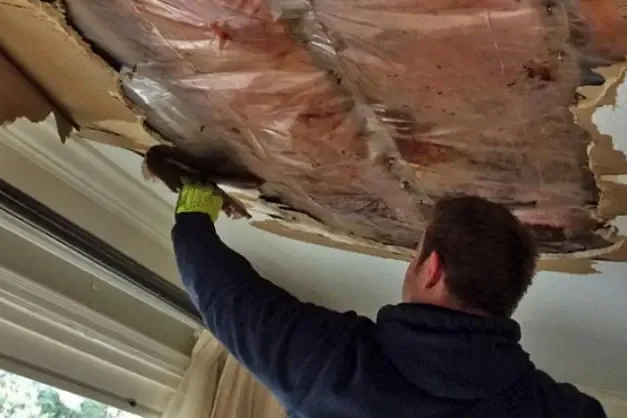
First steps for ceiling leak water damage
- Clear the space beneath. Keep people away from visible sagging, separating light dry belongings only when that can be done without standing under unstable or actively dripping material.
- Describe what is above. Identify any bathroom, appliance, attic, or plumbing area above the damage so the source investigation can begin with the building's actual arrangement and observed use.
- Avoid disturbing fixtures. Leave wet lights, switches, and ceiling panels untouched while appropriate professionals assess electrical conditions and determine how the overhead assembly can be opened safely.
- Retain source repair details. Save the repair description and photographs from any opening so the drying scope can follow the full affected cavity rather than only the visible ceiling patch.
A stained circle and a sagging ceiling call for different immediate precautions, but both need a source investigation. Water may have entered from a fixture, supply connection, or the roof before spreading above the finished surface. In Ridgefield, the cleanup discussion should begin with what occupies the space above the damage and whether the wet area is changing.
Give weakened panels room to fail safely
Furniture and occupants beneath a wet bulge can be exposed to falling material. The area should remain clear until the panel condition is assessed. An electrical fixture within the stain adds another reason to avoid touching the ceiling or trying to release trapped water with household tools.
A Pioneer Canyon owner can identify the upstairs room without opening the ceiling. At a Taverner Ridge property, noting whether the leak follows fixture use may help the source investigation. These observations should be recorded from a dry stable position while the affected space remains restricted.
Inspect beyond the edge of the paint mark
Ceiling paint may conceal wet insulation and moisture along the framing. Selective opening helps establish the affected layers and provides access for removal and drying. The opening should follow a defined assessment rather than stopping automatically at the edge of the visible stain.
- Check adjoining ceiling bays when water tracks continue along framing.
- Assess softened panels and wet insulation for safe removal.
- Identify electrical components requiring separate professional attention before work proceeds.
- Record the source repair and the condition exposed above the ceiling.
Rebuild only after the overhead assembly is ready
For a Greely Farms property, a useful scope separates source repair, overhead removal, drying, and finish replacement. If a pipe caused the loss, burst pipe cleanup may connect the ceiling work to the original release. Other sources require their own appropriate repair.
Drying retained framing takes access and moisture monitoring. A newly cut ceiling opening may improve that access, but the equipment arrangement still needs review as conditions change. Before closure, the record should identify which wet layers were removed, what remains, and whether nearby cavities need further attention.
A sagging wet ceiling should not be punctured by an occupant standing beneath it. Trapped water and loose panels can release unexpectedly. Keep the area empty and avoid operating wet switches or fixtures until safe assessment and appropriate electrical attention have been arranged.
Overhead damage needs a safe room and a clear source assessment. Describe sagging, dripping, nearby electrical fixtures, and the room or attic above the stain so the cleanup discussion starts with the relevant conditions.
(888) 509-1696Assess the ceiling cavityWhat does ceiling leak water damage cost in Ridgefield, WA?
Ceiling leak cleanup costs in Ridgefield reflect overhead access, damaged panel area, and hidden insulation wetness. The estimate should separate safe removal and drying from source correction and later ceiling finish repairs.
Small overhead loss
$1,000 to $2,000
- Limited ceiling opening
- Localized wet material
- Focused drying access
Several wet bays
$2,000 to $3,500
- Connected cavity checks
- Broader insulation handling
- Expanded framing exposure
Layered interior damage
$3,500 to $5,000+
- Multiple affected finishes
- More complex removal
- Additional moisture monitoring
Estimate only. Water category, affected materials and access determine the scope. Compare the inputs in the water damage cost calculator.
How ceiling leak water damage progresses
- 1
Assess the ceiling hazard
The initial inspection considers panel stability, visible electrical components, and safe room access before selecting removal methods or deciding where an overhead opening should be made.
- 2
Connect damage to its source
Conditions above the ceiling and information about fixture use or roof entry help coordinate source correction with the material inspection inside the affected overhead assembly.
- 3
Expose and dry retained layers
Unsuitable panels and insulation are addressed while remaining framing receives managed drying, with readings from adjacent areas helping establish whether moisture extends beyond the first opening.
- 4
Record readiness for closure
The completion discussion identifies materials retained, layers removed, drying results, and repairs still needed so replacement panels do not conceal unresolved moisture or an unfinished source correction.
Related water damage services in Ridgefield
Ceiling Leak Water Damage questions in Ridgefield, WA
Is a small ceiling stain always a small loss?
The stain can be smaller than the moisture held above it. Insulation and framing may carry water beyond the visible mark. An assessment checks the overhead assembly and adjoining bays before deciding how much material requires removal or drying.
Can a wet bulge be drained with a screwdriver?
Standing beneath unstable wet material creates a risk of sudden water and panel release. The space should stay clear while suitable professionals determine safe access. Electrical fixtures and concealed components also need consideration before any opening is made in the ceiling.
How can the source be narrowed down?
Information about the space above, fixture use, rainfall, and when the stain changes helps direct the investigation. The actual source still needs inspection. Cleanup should coordinate with that repair while assessing the water already held in the ceiling assembly.
Does drying equipment work through painted drywall?
An intact painted surface can limit access to moisture behind it. The appropriate setup depends on the condition and layers involved. Selective removal may be necessary to expose wet insulation or framing and allow the retained assembly to dry effectively.
Will the whole ceiling need replacement?
The extent depends on material strength, wetness, contamination, and access requirements. An assessment can distinguish affected panels from sound areas. The scope should explain each proposed removal area and identify the finish work needed after the retained materials are ready.
What should be checked before new panels go up?
The source should be corrected, unsuitable wet layers removed, and remaining materials evaluated for moisture. Nearby cavities also need attention where water traveled beyond the opening. A documented handoff helps the repair contractor understand the condition before closing the assembly.
Ceiling leak water damage in Ridgefield
Ceiling assessments can include Pioneer Canyon, Taverner Ridge, and Greely Farms properties, with the room above, visible sagging, and electrical fixtures identified during the initial discussion.
The same service nearby: ceiling leak water damage in Kelso, Rainier, Longview.
Keep the area below unstable panels empty
The next scope can connect safe material removal with source repair and the moisture checks needed before overhead finishes are restored to the room.
(888) 509-1696Discuss overhead cleanup and drying