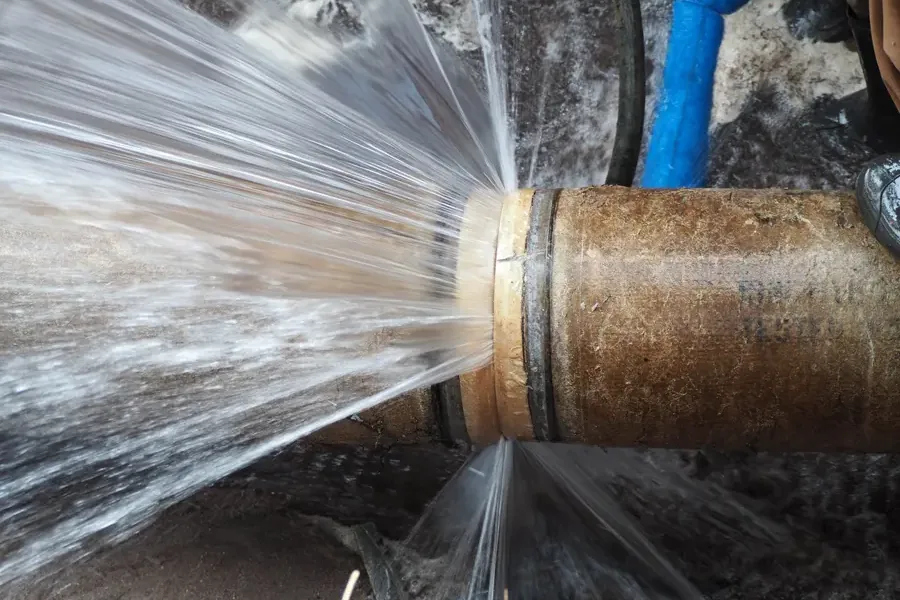
Ridgefield can assist customers with a water shutoff, while Clark Regional Wastewater District is the sewer provider identified by the city. During an active supply pipe release, the initial report should make clear that water is escaping from the supply system and describe the affected rooms. That information helps coordinate source control, plumbing access and cleanup without confusing the incident with a drain backup.
Key takeaways
- Report whether water is still escaping and which room provides the safest view of the release.
- Use a known accessible shutoff only when reaching and operating it can be done safely.
- Keep people away from wet electrical equipment and damaged overhead finishes.
- Give the plumber and cleanup crew the same discovery notes and room labels.
- Request a separate record of source repair and affected material assessment before closing the work.
Make the first report about the active condition
A clear initial message says where water is visible and whether the release appears ongoing. The occupant can name the room, describe the nearest recognizable fixture and explain any obstacle to safe access, giving the responding contact a practical starting point without approaching the damaged connection.
The City of Ridgefield Water Division manages municipal water delivery facilities, and the city offers shutoff assistance. An owner seeking that assistance should explain what has already been tried and whether the suspected household shutoff is accessible from a dry position at the property.
The burst pipe cleanup team also needs to know when the release was discovered and which rooms became wet. The same concise account can accompany the plumbing request, reducing conflicting descriptions as several people become involved in the response.
- State whether the water is still flowing or appears to have stopped.
- Identify a safe entrance and the room closest to the visible release.
- Report any water near electrical equipment without entering that area.
- Keep notes of the shutoff instructions and who provided them.
Keep shutoff actions within a safe and known approach
A familiar accessible valve may allow source isolation, but reaching it must not require crossing an unsafe room. If the valve location is unclear or the route passes standing water, damaged flooring or electrical hazards, the household should describe the obstacle and arrange the appropriate assistance.
After an attempted shutoff, the occupant should report what changed rather than assuming all connected water has stopped. Water already released into a ceiling, wall or upper floor can still appear elsewhere, and the plumbing assessment needs to distinguish that stored water from an active source.
The record should name the valve or control operated in terms the next professional can recognize. A photograph from a safe position can supplement the description, helping the plumber understand the current system condition before further testing or repair access begins.
- Keep the route to a known valve clear only when the surrounding space is safe.
- Record the observed change after a valve is operated.
- Tell the plumber about any controls whose position has been changed.
- Leave unfamiliar utility equipment to the appropriate service contact.
Follow the release into adjoining and lower rooms
Water escaping at a pipe connection may reach more than the room where the failure is visible. The cleanup inspection should trace the floor perimeter, adjoining openings and any accessible space below, using room labels that connect the source location with the resulting material damage.
An upper room release can require a ceiling leak assessment beneath the original wet area. Occupants should stay clear of sagging or loose overhead finishes while the crew determines safe access and the condition of the ceiling layers and nearby electrical fixtures.
A room diagram helps keep concealed locations in the work plan. Closets, fixed cabinets and shared wall cavities can interrupt a simple view of the water path, so each inspection limit should be noted until the affected materials can be assessed or the boundary established.
- Include the room below an upper floor release in the access discussion.
- Mark wet thresholds and adjoining storage areas.
- Describe overhead changes from outside the unsafe area.
- Keep unexamined cavities identified until their inspection is complete.
Let plumbing access and cleanup support each other
The plumber needs room to reach the damaged component, while the restoration crew needs to understand the materials wetted around it. The owner can connect those tasks by sharing the source location and access plan before either trade assumes an opening serves the entire loss.
Photographs taken as an opening is made can show the pipe position, nearby framing and visible wet layers. Those images should be kept with the repair description so the homeowner and later finish contractor can distinguish the source work from additional material removal required for cleanup.
Once the release is controlled and access is appropriate, water extraction can recover accessible liquid from the affected rooms. The crew can update its material survey as furniture moves or coverings are opened, capturing newly visible damage beyond the original plumbing repair area.
- Give both trades the same room names and discovery photographs.
- Identify who will approve an expanded opening if more damage becomes visible.
- Retain photographs of the exposed assembly before it is changed again.
- Separate the pipe repair description from the list of affected building materials.
Explain the remaining drying work to the household
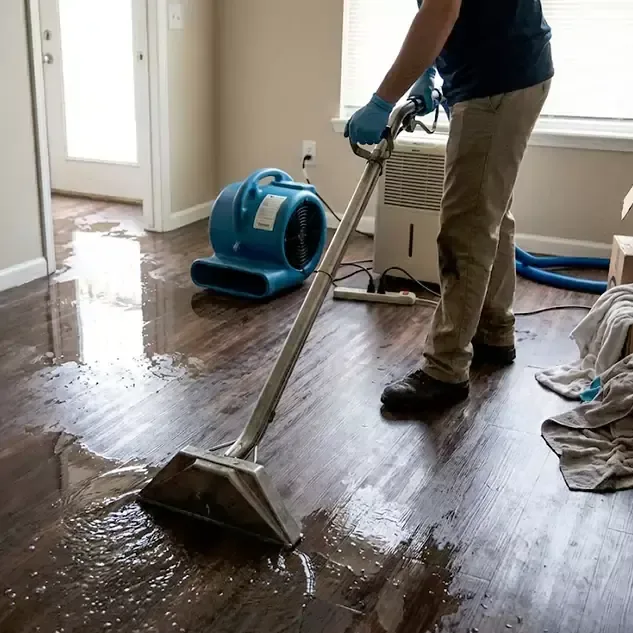
The end of an active spray is a major change, but the retained floor, wall and ceiling materials still need assessment. The crew should explain which components remain wet and how their condition will be followed after extraction and the necessary access work are complete.
Equipment placement should be connected to that material plan. Occupants need to understand which rooms remain restricted, where hoses or cables are routed and whom to contact if the arrangement interferes with essential movement, so a practical change can be made without losing the purpose of the setup.
Progress updates should use recognizable locations and describe what remains to be done there. A homeowner can make better arrangements for later repairs when the unfinished task is identified as a specific cavity or floor section instead of being summarized only as continued drying throughout the house.
Finish with a repair record that another contractor can use
The source repair record should describe the corrected component and any further plumbing work needed. The cleanup record should identify affected rooms, materials removed and the final condition of retained assemblies, allowing a contractor who arrives later to understand the opening and the surrounding surfaces.
Photographs before and after access help explain the original room arrangement and the work still required to restore finishes. The owner can use that paired record to discuss replacement materials, matching boundaries and any area that must remain accessible until another inspection is completed.
A final handoff should assign each remaining task to the relevant contact and state any continuing room restriction. That gives the household a practical route from source control through cleanup to repair completion, with the separate parts of the work recorded clearly enough to revisit if questions arise.
Questions
Who provides sewer service in Ridgefield?
The city identifies Clark Regional Wastewater District as the sewer provider. A household report should distinguish wastewater backing through a drain from a supply pipe releasing water so the concern is described accurately to the appropriate contact.
What if the household shutoff cannot be reached safely?
The occupant should keep clear and describe the access problem when requesting assistance. The city offers help with water shutoffs, and the responding contact can provide instructions suited to the reported conditions at the property.
Why can water still appear after source isolation?
Water already released may remain within an upper floor or other assembly and become visible elsewhere. The plumbing and material inspections should determine whether the continuing observation reflects an active source or water already inside the structure.
Which record matters most before a wall is repaired?
The finish contractor needs the source repair information together with the condition of the exposed materials. The handoff should also identify any location awaiting inspection so an access opening is not covered before its remaining purpose is complete.