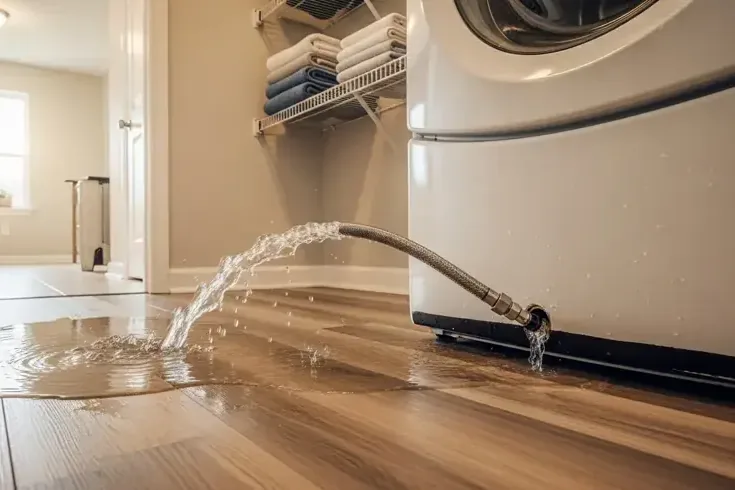
Rainier's 2020 census summary lists both owner occupied and renter occupied homes, with 34.1% of occupied housing units rented. A washing machine leak in a rented home needs clear communication about the appliance, affected floor and access for repairs. The occupant's first observations can help the owner arrange the right inspection without losing track of water that spread beyond the laundry area.
Key takeaways
- Stop the appliance cycle when that can be done safely and report the observed release.
- Describe whether water appeared during filling, washing, draining or while the appliance was idle.
- Photograph the laundry floor and nearby thresholds before moving affected belongings.
- Coordinate access and any material opening with the authorized property contact.
- Keep appliance repair details separate from the assessment of wet flooring and wall edges.
Describe the appliance behavior at the time of discovery
The first message to the property contact should explain what the machine was doing when water appeared. A release noticed during filling, a puddle found after a cycle and water discovered while the appliance was idle provide different starting observations for the person checking the equipment.
The occupant can describe visible water and the controls already used without pulling a heavy machine away from the wall. If electrical equipment or standing water makes the area unsafe, the report should state that limitation and leave appliance access to the appropriate responding professional.
The appliance leak cleanup assessment should follow the water outside the equipment footprint as well as around it. A repair that addresses the hose or appliance still leaves the building inspection to determine which floor and wall materials became wet during the release.
- Record the cycle activity observed when the water was first noticed.
- State whether the appliance has been stopped and whether water is still appearing.
- Photograph visible connections only from a position that is safe to reach.
- Tell the owner about water near a receptacle, cord or powered appliance.
Make the access arrangement clear to everyone involved
A tenant, owner and appliance technician may each have different information about the same loss. The property contact should collect the discovery notes and establish how the repair and cleanup crews will enter, who will meet them and which rooms they need to inspect.
The tenant can identify stored belongings, occupied rooms and any restriction that affects movement through the home. That information helps the crew plan an inspection without arriving to find the laundry area blocked by contents or an adjoining space unavailable when it needs to be checked.
Any proposal to open a finish or remove a fixed component should be communicated to the authorized property contact with its purpose. A written explanation of the affected location and required access keeps the decision connected to the building condition instead of being passed along as an unexplained request.
- Keep a shared description of the room and affected doorway or threshold.
- Identify who will authorize building material work.
- Arrange a way to discuss newly discovered moisture during the inspection.
- Keep the occupant informed about rooms that may need temporary access restrictions.
Look beneath the flooring edge and beside cabinet bases
Laundry water can continue into an adjoining room before a visible puddle becomes large. The inspection should include the doorway transition, wall base and any fixed cabinet or platform that conceals part of the floor, with observations recorded before the equipment arrangement changes the view.
Different floor layers can present different access questions. A surface covering, its backing and the material below should be identified where visible, giving the technician a basis for deciding what can be assessed in place and where a limited opening may be needed.
The owner benefits from photographs that show those layers together with the room location. If a covering needs removal, the record can explain the material condition and the reason, allowing the next contractor to understand what was exposed without depending on a general description of wet flooring.
- Include the floor beneath nearby stored items when access is available.
- Mark where a laundry finish meets carpet, wood or another covering.
- Record moisture observations along the adjacent wall base.
- Keep concealed areas on the inspection list until their condition has been addressed.
Recover accessible water before judging the remaining damage
Water extraction helps remove liquid from accessible affected surfaces and makes the condition underneath easier to assess. The extraction area should follow the observed spread into adjoining spaces instead of stopping at the boundary of the room containing the washing machine.
Contents moved to make room for equipment need a designated dry location and a record of their original position. A basket, storage carton or piece of furniture may conceal wet flooring, so its movement can reveal an inspection location that belongs in the updated room sketch.
Once the open liquid is removed, the crew can explain which assemblies remain wet and what treatment they need. That discussion should separate the improvement visible on the surface from the outstanding decisions about backing, wall cavities and any material exposed during access work.
- Photograph newly exposed floor sections as contents are moved.
- Keep affected soft goods separate while their condition is assessed.
- List adjoining rooms included in the extraction work.
- Ask which concealed location is still waiting for access after the visible water is gone.
Track drying without interrupting the repair coordination
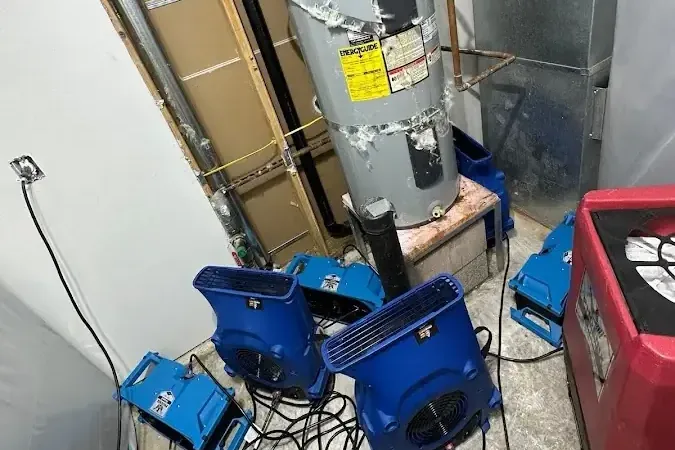
The appliance repair record should say what was corrected and whether further service is required. The restoration crew can then coordinate structural drying around the retained building materials, using labeled locations and repeat observations to follow their response after the source has been addressed.
Occupants need practical instructions about the work arrangement, including equipment placement and any room restrictions. If a machine or hose obstructs daily movement, the property contact and crew should discuss a workable change rather than allowing equipment to be moved without the drying plan being reviewed.
The progress message should describe the actual remaining material, such as a floor edge or exposed wall base. Specific language helps the tenant understand why work continues and gives the owner enough information to arrange any later replacement without treating the appliance repair as the end of the incident.
Close the incident with a room record and repair list
The handoff should bring together the discovery notes, appliance findings, affected material photographs and drying results. Each document answers a different question, so the owner and occupant can understand what caused the interruption, what happened to the room and which work remains to restore its ordinary use.
If a finish has been removed, photographs of the exposed floor and wall should accompany the repair description. That gives the repair contractor a clearer view of the required work and helps the property contact explain the scope before scheduling access to an occupied home.
The final update should identify any continuing restriction and the person responsible for the next task. A clearly assigned repair list reduces confusion when the cleanup crew, appliance technician and finish contractor complete their work at different times and the tenant needs to know what happens next.
Questions
What should a Rainier tenant report about a washer leak?
Useful details include the appliance activity, the first visible water location and any controls already used. The report should also identify adjoining rooms that look affected and anything preventing safe access to the laundry area.
Should the washing machine be pulled out immediately?
Movement should wait until safe handling and utility connections have been considered. The occupant can begin with photographs from the accessible side and let the appropriate technician arrange the view behind or beneath the equipment.
Who needs to hear about an inspection opening?
The authorized property contact should receive the location and purpose of the proposed access. The occupant also needs to know how that work will affect room use, belongings and the route through the home.
What separates appliance repair from floor completion?
A corrected appliance addresses the equipment problem. The room completion record should also explain the condition of affected building layers, their drying assessment and any replacement or finishing still needed before ordinary use resumes.